
Structural stigma is embedded within community, interpersonal and individual spheres.
Structural stigma is an expansive concept that describes the ways in which discriminatory policies, frameworks and systems play a role in impacting population-level, interpersonal and individual well being. Often these discriminatory systems are hidden and operate beneath the surface.
Exposing Connections
How to use this site
1 Step one
Reflect on the definitions and stories of structural stigma shared on this site. When have you experienced the impacts of structural stigma in yours?
2 Step two
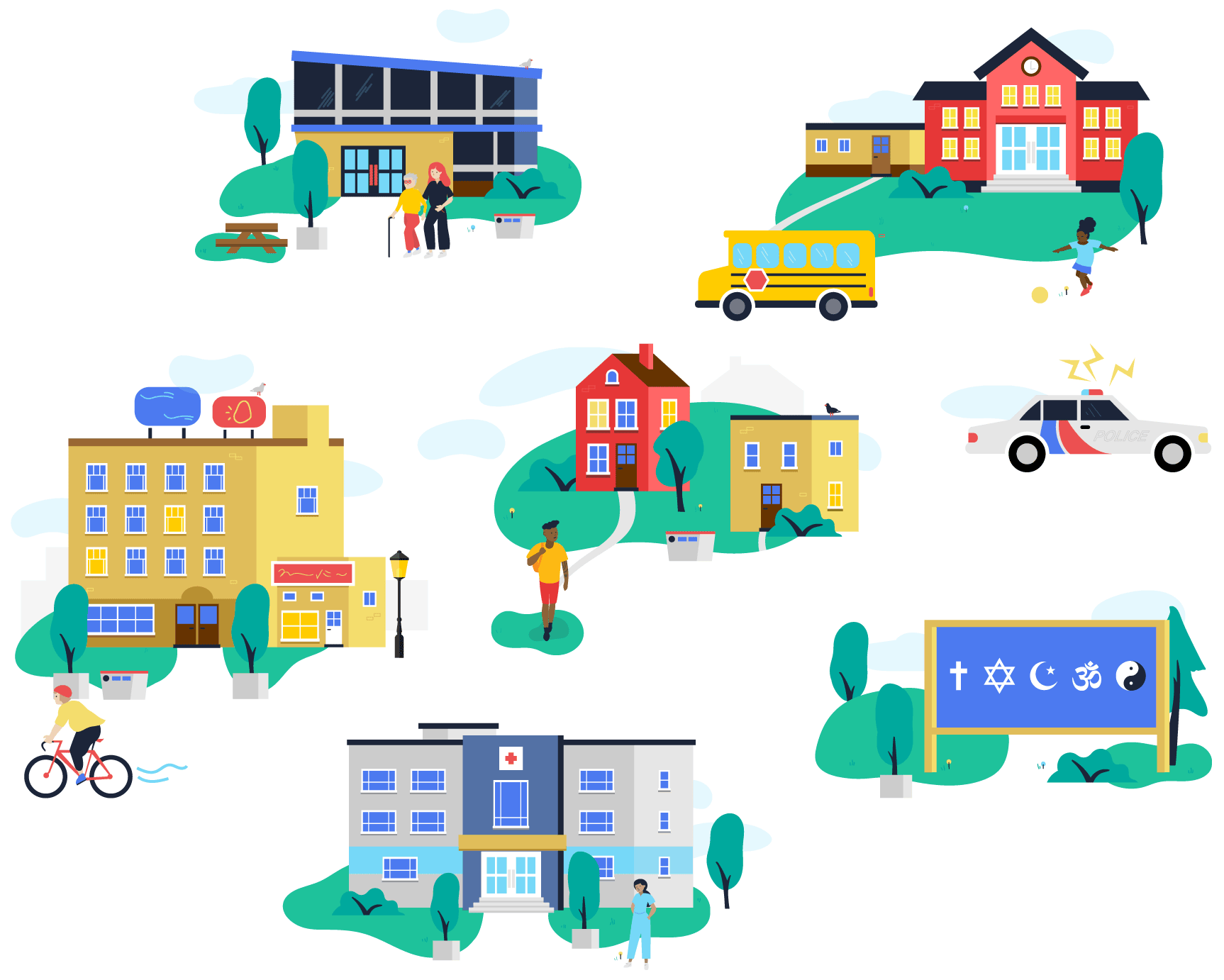
Use the map above to explore what structural stigma looks like in different settings.
3 Step three
Reflect on the prompts and community contributions.
4 Step four
Add your own
What is structural stigma?
Stigma consists of socially constructed labels that are used to exclude or mark individuals as deviant or lesser than the norm.
Through simplifying, reducing and labelling, individuals are dehumanized by stigma and deemed less worthy in the eyes of society. Structural stigma is defined as societal-level conditions, cultural norms, and institutional policies that influence how stigma is enacted in practice. Understanding structural stigma requires deconstructing how individual level practices are shaped by broader forces. When systems in society are designed by folks who do not have lived experience with mental illness, policies do not reflect the needs of people who do have lived experience. These policies then become the norm of society and are embodied by laws, policies, regulations, professional practice within public and private institutions. Structural stigma is then “baked” within the system and can manifest itself within a variety of spheres, whether that be health care, academic spaces, housing, employment and the criminal justice system.
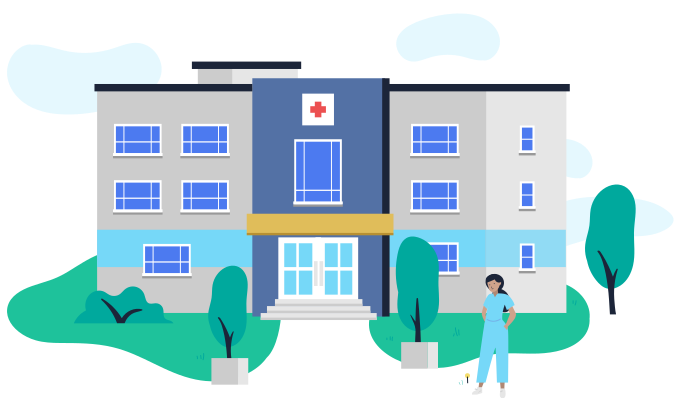
In hospitals
Priya (she/her) is a 16 year old girl who lives with clinical depression.
After an argument with her brother, who called 911 because he was concerned about her after he found a pack of unknown pills in her room, she arrived at the emergency department. She was triaged and placed in a room on the side of the ED that looked different from the other beds. There was a small window in the room she could look out from and no examination tools that were found in other beds. On her way to the bathroom she heard two health care professionals refer to her as the “psych patient.” She noticed other patients who had arrived after her receive care before her and waited for hours before she had been seen.

In academic spaces
Trigger warning: suicide. Dylan (they/them) is a medical student who has lived experience with ADHD, depression and occasionally panic attacks.
After working several nights on call and seeing a patient they had cared for pass away, Dylan finds themselves unable to get out of bed, hopeless and utterly burnt out. Dylan begins to struggle with thoughts of ending it all. They don’t have the energy or ability to ask for accommodations. They miss several deadlines for academic commitments and fail an exam. The school contacts them saying according to policy, they must put them on probation. Dylan feels even more hopeless after seeing this email and wonders why they entered medicine.
Helping professionals
Sean (he/him) is a physician working in the emergency department.
He has lived experience with bipolar disorder. With the COVID-19 pandemic, he feels extremely burnt out and feels numb after witnessing so much death in the community. He is unsure whether to open up to a colleague and open up about wanting to take a mental health day. After caring for a patient with suicidal ideation, he returns to his desk and his colleague turns to him saying, “thanks for taking that mental health patient, I’ve already seen them a couple of times and I can’t believe they are back again.” Sean no longer wants to ask this colleague if he can take on his shift and isn’t sure where to turn to, as he does not want to be recognized by his colleagues if he were to seek help within the hospital system.